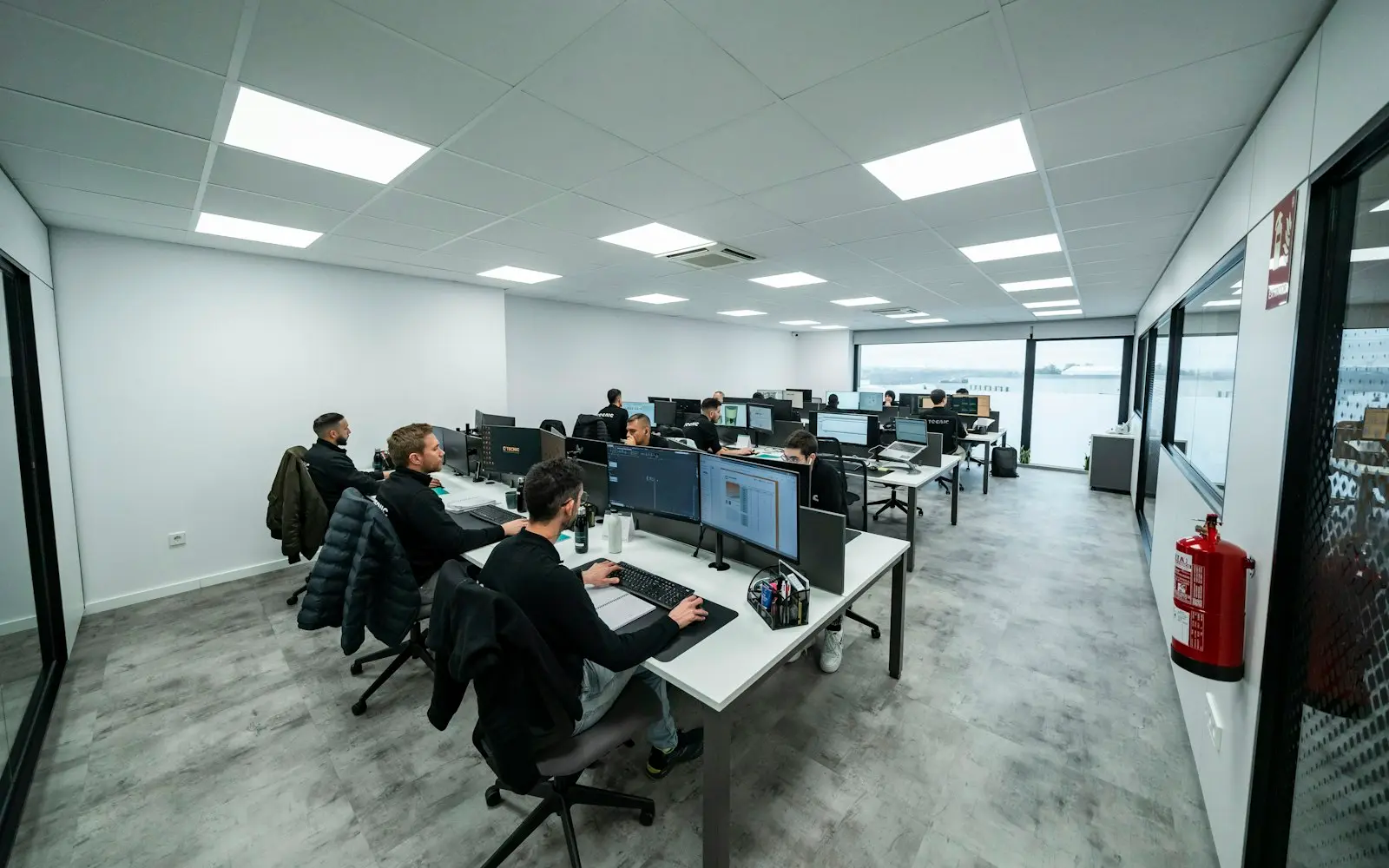
A development team in Dhaka shares three to seven office hours a day with clients in London, Berlin, Dubai, Riyadh and Sydney, and none with New York, Chicago or San Francisco unless one side shifts its day. Bangladesh stays on UTC+6 all year, so the overlap only moves when your own clocks change for daylight saving. For US clients the pattern that works is a short call at the start of the American morning, which is the Dhaka evening, backed by written handovers that keep work moving while you sleep. This guide gives the offshore team time zone overlap for each city and the routine that makes working with an offshore development team predictable.
Dhaka keeps one clock all year
Bangladesh tried daylight saving once, in the second half of 2009, and has stayed on UTC+6 since. The IANA Time Zone Database, which most operating systems and calendar apps rely on, records Asia/Dhaka at a fixed UTC+6 from 2010 onward in its asia data file. Dubai (UTC+4) and Riyadh (UTC+3) also keep one offset all year. The clocks that move are yours:
- United States. Daylight saving runs from 2:00 a.m. on the second Sunday of March to 2:00 a.m. on the first Sunday of November, according to NIST. The 2026 dates are 8 March and 1 November.
- EU and UK. Summer time runs from 01:00 GMT on the last Sunday of March to 01:00 GMT on the last Sunday of October under Directive 2000/84/EC, and the UK changes on the same Sundays (GOV.UK). The 2026 dates are 29 March and 25 October.
- Sydney. New South Wales moves its clocks forward at 2am on the first Sunday of October and back at 3am on the first Sunday of April, according to the NSW Department of Communities and Justice. The current period runs from 4 October 2026 to 4 April 2027.
Because the US and Europe change on different Sundays, New York sits four hours behind London instead of five for two or three weeks each March and for one week from late October.
Overlap windows by city
This table assumes a Dhaka working day of 09:00 to 18:00 and a client day of 09:00 to 17:00, both in local time on the 24-hour clock.
| Client city | Client clock and period | Dhaka vs client | Overlap, client time | Overlap, Dhaka time | Hours |
|---|---|---|---|---|---|
| London | GMT (UTC+0), late Oct to late Mar | +6 h | 09:00–12:00 | 15:00–18:00 | 3 |
| London | BST (UTC+1), late Mar to late Oct | +5 h | 09:00–13:00 | 14:00–18:00 | 4 |
| Berlin | CET (UTC+1), late Oct to late Mar | +5 h | 09:00–13:00 | 14:00–18:00 | 4 |
| Berlin | CEST (UTC+2), late Mar to late Oct | +4 h | 09:00–14:00 | 13:00–18:00 | 5 |
| Dubai | UTC+4, all year | +2 h | 09:00–16:00 | 11:00–18:00 | 7 |
| Riyadh | UTC+3, all year | +3 h | 09:00–15:00 | 12:00–18:00 | 6 |
| Sydney | AEST (UTC+10), early Apr to early Oct | -4 h | 13:00–17:00 | 09:00–13:00 | 4 |
| Sydney | AEDT (UTC+11), early Oct to early Apr | -5 h | 14:00–17:00 | 09:00–12:00 | 3 |
The Dhaka morning matches the Sydney afternoon and the Dhaka afternoon matches the European and Gulf morning, so one team can serve both regions inside a normal day. From late October to late March, London and Sydney both drop to three shared hours.
The Bangladesh time zone US overlap is zero in standard office hours, because 18:00 in Dhaka is 07:00 or 08:00 in New York. A shared slot means one side starts early or stays late. The next table shows a one-hour slot at the start of the US morning.
| Client city | Client clock and period | Meeting, client time | Meeting, Dhaka time |
|---|---|---|---|
| New York | EDT (UTC-4), Mar to Nov | 09:00–10:00 | 19:00–20:00 |
| New York | EST (UTC-5), Nov to Mar | 09:00–10:00 | 20:00–21:00 |
| Chicago | CDT (UTC-5), Mar to Nov | 08:00–09:00 | 19:00–20:00 |
| Chicago | CST (UTC-6), Nov to Mar | 08:00–09:00 | 20:00–21:00 |
| San Francisco | PDT (UTC-7), Mar to Nov | 07:00–08:00 | 20:00–21:00 |
| San Francisco | PST (UTC-8), Nov to Mar | 07:00–08:00 | 21:00–22:00 |
San Francisco can also meet at the end of its day. A call at 17:00 in San Francisco is 06:00 the next morning in Dhaka during Pacific daylight time and 07:00 during Pacific standard time. With the West Coast, plan two or three live calls a week and rely on written handovers for the rest.
How daylight saving moves your meetings
A meeting fixed in your time zone moves in Dhaka time twice a year. A 09:00 New York call is 19:00 in Dhaka from March to November and 20:00 over the winter. A 10:00 London call is 15:00 in Dhaka during British Summer Time and 16:00 for the rest of the year. A 14:00 Sydney call is 10:00 in Dhaka from April to October and 09:00 from October to April.
Decide which side absorbs the hour before the first change. An invite anchored to New York time stays at 09:00 there and moves for Dhaka, while one anchored to Dhaka time stays at 19:00 and becomes 08:00 in New York over the winter. Write both zones in every invite and ticket, such as "09:00 New York / 19:00 Dhaka", and use UTC for release windows.
How to set up the overlap meeting
Set the frequency by how much overlap you have:
- Dubai and Riyadh. A daily 15-minute check-in, for example at 11:00 in Dubai (13:00 in Dhaka) or 11:00 in Riyadh (14:00 in Dhaka).
- London and Berlin. A daily check-in at 10:00 your time, which leaves the Dhaka team at least two working hours to act on your answers.
- Sydney. A daily call at the start of the Dhaka day, which is your early afternoon.
- New York, Chicago and San Francisco. Two or three 30-minute calls a week at the start of your morning. The Dhaka lead attends every call, and developers join when their work is on the agenda.
Keep a fixed agenda of blockers, decisions and priority changes, and leave status to the written handover. When managing remote developers in different time zones, rotate the inconvenient slot if one side always carries it.
Check working days as well as hours. Bangladesh's official weekend is Friday and Saturday, the same as Saudi Arabia's, while most clients in the US, UK, Europe, the UAE and Australia work Monday to Friday, so agree in writing which days the team works. For contracts, access and ownership, see our guide on how to outsource software development.
Async communication for development teams
With a gap of ten hours or more, the team works while you sleep. You review and answer during your day, and the next build is ready when you start the following morning. That only works when tasks can start without a meeting, and six habits make it reliable.
Written specs
Each feature starts with a short spec covering the user goal, acceptance criteria, edge cases, designs, sample data and anything out of scope. The team batches its questions before the next call. Our guide to software development project planning covers scoping work before a sprint.
A definition of ready
A ticket enters a sprint only when its acceptance criteria are testable, designs and sample data are attached, dependencies are named, open questions have answers, and someone on your side can answer follow-ups within one working day. Tickets that fail the check wait for the next sprint, so the team never loses a day waiting for an answer.
Pull-request descriptions
Each pull request says what changed and why, links the ticket, lists test steps, shows screenshots for visible changes and notes risks and how to roll back. Your reviewer can comment after the developer has logged off, and the developer picks the comments up the next morning.
Recorded demos
A screen recording of a few minutes replaces many status meetings. You watch when it suits you and reply with timestamps, which keeps live time for decisions.
A decision log
One shared page records each decision with its date, the options considered, who decided and a link to the discussion, so a choice made on a Dhaka evening call is easy to find weeks later.
Handover notes at the end of the Dhaka day
Before signing off, the team posts a note covering:
- Done today, with links to pull requests or builds
- In progress, with the next step
- Blocked, and what is needed from whom
- Numbered questions for you
- Anything deployed, and where
Sent at 18:00 in Dhaka, the note reaches New York at 07:00 or 08:00 and London at 12:00 or 13:00. Your answers are waiting when the team starts at 09:00 Dhaka time, which is 22:00 or 23:00 the previous evening in New York.
Handling urgent production issues
Outages need a faster path than async messages, and it should be agreed before launch.
- Severity levels. Define in writing what counts as severity one (product down, payments failing, data exposed) and what can wait a working day.
- Escalation by phone. Name who gets called for a severity-one incident outside the overlap, plus a backup.
- Coverage that fits the product. If you need someone available at any hour, put an on-call rota and its cost in the contract, or split coverage with your own staff.
- Monitoring and runbooks. Alerts reach whoever is on duty, and runbooks cover restarts, rollbacks and switching off a feature flag.
- Release timing. Release when the people who made the change can watch it. A 10:00 Dhaka release is around midnight in New York and leaves the team a full day to respond. A release in the last hour of the Dhaka day leaves nobody watching it.
- A rollback your side can trigger. Feature flags let your staff switch a change off without waiting for Dhaka.
- A written incident review within a working day or two.
A sample weekly rhythm
This two-week sprint pattern suits a New York client during US daylight saving time. Over the winter the Dhaka times move one hour later unless you anchor the calls to Dhaka time.
| New York (EDT) | Dhaka | What happens | Format |
|---|---|---|---|
| Mon 09:00–10:00, week 1 | Mon 19:00–20:00 | Sprint planning | Live call, draft plan shared a day ahead |
| Daily, about 08:00 | About 18:00 | Handover note | Written |
| Tue and Thu 09:00–09:30 | Tue and Thu 19:00–19:30 | Check-in on blockers and questions | Live call |
| Wednesday | Wednesday | Work-in-progress walk-through | Recorded video |
| Thu 09:00–10:00, week 2 | Thu 19:00–20:00 | Sprint demo of working software | Live call, recorded |
| End of week | End of week | Progress, next steps, risks and decisions needed | Written weekly update |
The demo replaces the Thursday check-in in week 2. For London, hold the live calls at 10:00 London, which is 15:00 in Dhaka during British Summer Time. For Sydney, use your early afternoon. Dubai and Riyadh have room to add a daily check-in. Our delivery process follows the same pattern of planning, demos and written updates.
Working with Cyan Orbit from Dhaka
Cyan Orbit's engineering team is based in Dhaka and works remotely with clients in the United States, the United Kingdom, Canada, Australia, the EU, the UAE and Saudi Arabia, arranging meetings around each client's working hours. Projects run in two-week sprints with a working demo at the end of each, you receive a short written update every week, and the code sits in your repository from the first commit. Read more about offshore development in Bangladesh or see how a custom software development project runs with us. When you are ready, send us your project details. The first reply comes within one business day, and the written estimate is free.