AI & Emerging Tech

AI Development Company for RAG, Agents and ML Pipelines

We build the AI itself: retrieval systems over your data, agents that take action, and models tuned and evaluated against your own cases.

NDA on request · Free, no-obligation estimate · Reply within one business day

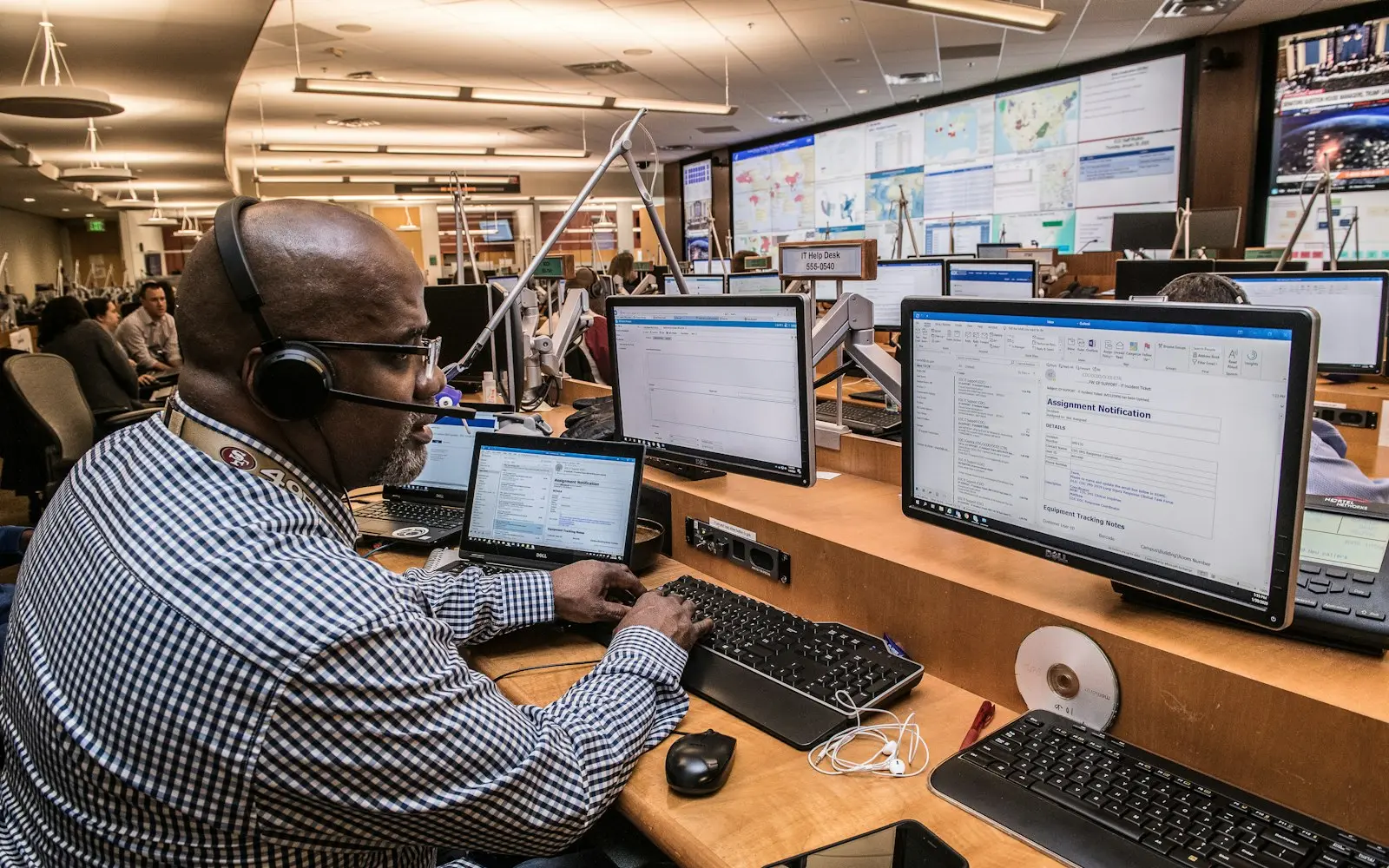
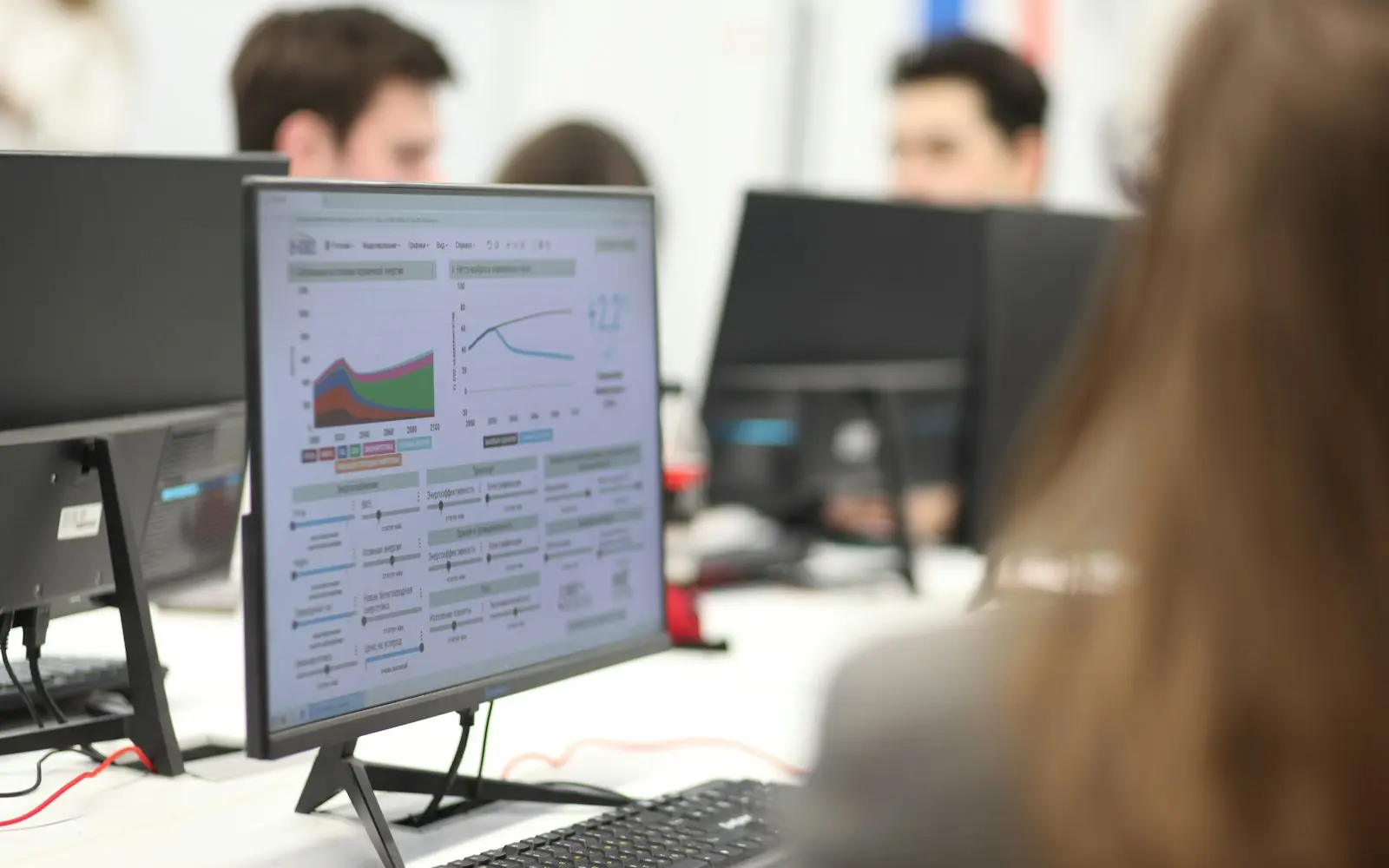
Analysts at desks with a monitor showing data charts and model curves
NDA before discovery
You own the code and IP on payment
Code in your repository from day one
A working demo every two weeks
Senior engineers do the work
How we work

Most AI requests start with a demo that worked once and a question nobody can answer: will this hold up with real users and real data. We build the underlying system, not a wrapper around a public chatbot. That means retrieval pipelines indexed on your documents, agents that call your internal tools, models fine-tuned on your own examples, and an evaluation harness that tells you when a change made things better or worse.

Most of the work is engineering: data pipelines, evaluation and integration, with prompt writing a small part of it. We chunk and embed your content, choose a retrieval strategy that returns the right passages instead of merely similar ones, design tool schemas an agent can call safely, and build the golden datasets that let you compare model versions on the cases that actually matter to your business. Guardrails, cost per request and latency budgets are part of the design, not an afterthought bolted on after launch.

If what you need is AI added to a CRM, helpdesk or ERP you already run, that is a narrower, faster project: see AI integration. This page covers building the AI system itself, whether that is a support agent that reads your product docs, a fine-tuned classifier for your support queue, or a computer vision model trained on your own images.

What we deliver

AI Development services

  • Retrieval-Augmented Generation Systems

    We index your documents, product data or support history into a retrieval pipeline: chunking strategy, embeddings, vector search and a re-ranking step so the model answers from the passages that actually apply, with citations back to the source.

  • Custom AI Agents

    Agents that plan multi-step tasks, call your internal tools and APIs, and escalate to a human when confidence is low. We design the tool schema, the permission boundaries and the fallback path before the agent ever touches production data.

  • Model Fine-Tuning and Evaluation

    Fine-tuning hosted or open-weight models on your own examples, paired with an evaluation harness: a golden dataset, automated scoring and human review, so you can tell whether a new model or prompt version is actually an improvement.

  • Machine Learning Pipelines

    Data pipelines that feed training and inference: feature extraction, batch scoring jobs, real-time inference endpoints, and the versioning that lets you roll back a model the same way you'd roll back a deploy.

  • Computer Vision

    Defect detection on a production line, document and ID classification, OCR pipelines for scanned forms. Trained on your own image set, not a generic pretrained model presented as a finished product.

  • Natural Language Processing

    Classification, entity extraction and summarization tuned to your domain's vocabulary: legal clauses, medical terminology, claims language or logistics shorthand that a general-purpose model gets wrong by default.

  • Guardrails and Safety Layers

    Input and output filtering, PII redaction before data reaches a model, prompt injection defenses for anything that reads untrusted text, and a defined refusal path instead of a silent failure.

  • Cost and Latency Optimization

    Model routing between cheaper and more capable models by request type, response caching, batching, and per-feature budget limits so a spike in usage triggers a dashboard alert well before it reaches the invoice.

You receive

Deliverables

  • A working RAG or agent system running against your production data
  • An evaluation harness with a golden dataset and pass or fail thresholds
  • Source code and pipeline configuration in your repository
  • An architecture diagram and data flow documentation
  • Cost and latency dashboards per feature
  • A runbook for monitoring model drift and handling escalations

How we work

Our ai development process

  1. Data and Use Case Audit

    We look at what data actually exists, how clean it is, and which use case has the clearest success measure before committing to an architecture.

  2. Prototype and Feasibility Check

    A narrow prototype against real (not sample) data, tested against edge cases the demo version would never hit, to confirm the approach before full build.

  3. Architecture and Guardrail Design

    Retrieval strategy, tool permissions, PII handling and refusal behavior are designed and reviewed before implementation starts, not patched in afterward.

  4. Build and Evaluation

    We build the system alongside its evaluation harness so every change is measured against the golden dataset from day one, not just at the end.

  5. Pilot With Real Users

    A limited rollout to a real user group, with logging on every low-confidence or escalated case, before the system reaches everyone.

  6. Production Hardening and Handover

    Cost, latency and drift monitoring go live, and your team gets the runbook and access needed to operate the system without us.

When Retrieval Beats Fine-Tuning

Retrieval-augmented generation works when the answer already exists somewhere in your documents and the model's job is to find and phrase it. It's faster to build, cheaper to update (add a document instead of retraining) and easier to audit, because every answer traces back to a source passage.

Fine-tuning earns its cost when the task is about style, format or judgment that isn't written down anywhere: matching a specific tone, learning a classification scheme your team applies by instinct, or handling inputs that don't map to any single retrievable document. Most projects use both: retrieval for facts, fine-tuning or careful prompting for how the answer is delivered.


Evaluating a Model Before It Reaches Users

A demo that works on three examples tells you almost nothing. We build a golden dataset from your real cases, including the ones that are hard on purpose, and score every model or prompt change against it before it ships.

Some of that scoring is automated (does the answer contain the right facts, does the agent call the right tool). Some of it needs a human grader, especially for tone or judgment calls. The output is a pass rate you can watch over time, so a regression shows up as a falling score before any user reports it.

  • Golden dataset built from real production cases, not synthetic examples
  • Automated scoring for factual and structural correctness
  • Human review sampling for tone and judgment calls
  • Regression tracking across model and prompt versions

Keeping an Agent Inside Its Guardrails

An agent that can call tools can also call the wrong one, or the right one with the wrong arguments. We scope each tool's permissions narrowly, require explicit approval for anything destructive or costly, and log every call the agent makes.

For agents that read untrusted text (emails, uploaded documents, web content), we design against prompt injection specifically: treating that text as data the model should never follow as an instruction, and testing with adversarial inputs before launch rather than after an incident.

Budget

What drives cost and timeline

  • Data readiness

    Clean, structured data indexes quickly. Data scattered across five systems in inconsistent formats adds real engineering time before any model work begins.

  • Model choice

    A hosted API call costs less to build than fine-tuning or self-hosting an open-weight model, but the trade-offs on data control and per-request cost run the other way.

  • Accuracy bar required

    A system that drafts a reply for a human to approve needs far less evaluation rigor than one that acts without review.

  • Integration complexity

    An agent that only reads one system is simpler than one that reads and writes across your CRM, billing and inventory tools.

  • Ongoing inference volume

    Request volume drives infrastructure cost independently of build cost, and it's worth modeling before launch rather than after the first invoice.

Compliance

Standards we design and build to

None of these is a certification or attestation held by this agency. They are the standards we design and build client systems to, so your own audit or assessment starts from a sound base.

  • GDPR / UK GDPR

    Personal data handled on a lawful basis, with data minimisation and a documented retention policy.

  • HIPAA safeguards

    Administrative, physical and technical safeguards applied where a system touches protected health information.

  • PCI DSS scope reduction

    Card payment flows tokenised through a certified processor so cardholder data never touches your systems.

  • SOC 2 readiness

    Access control, change management and audit logging built in from day one, ready for a client's own SOC 2 audit.

  • WCAG 2.2 AA

    Keyboard navigation, colour contrast and screen-reader labelling checked against the AA success criteria.

  • OWASP ASVS

    Authentication, session handling and input validation reviewed against the Application Security Verification Standard.

We list certifications only when they are real and current. See our security practices →

FAQ

AI Development FAQs

How long does it take to build a RAG system over our documentation?

A first working version typically takes a few weeks once we have access to the actual documents and a clear sense of the questions it needs to answer. Timeline depends most on how consistent your source material is: well-organized documentation indexes fast, while content scattered across wikis, PDFs and old tickets needs a cleanup pass first.

Can you fine-tune a model on our support tickets without sending them to a third party?

Yes. We can fine-tune open-weight models on infrastructure you control, or use a hosted provider's private fine-tuning option where your data isn't used to train their base models. Which option fits depends on your data sensitivity and existing infrastructure, and we'll lay out the trade-offs before you choose.

How do you stop an AI agent from taking the wrong action?

We scope every tool the agent can call to the narrowest permission it needs, require explicit approval for destructive or costly actions, and log each call. Agents that read untrusted content also get tested against adversarial inputs designed to make them ignore their instructions, before they ever reach production.

What's the difference between a chatbot and an agent?

A chatbot answers questions from what it can retrieve or recall. An agent takes multi-step action: it can look something up, decide what to do next, call a tool or API, and check its own result before continuing. Most support bots only need retrieval; agents make sense only when the task requires taking actions in other systems as well as answering.

How do you measure if a new model version is actually better?

We score it against a golden dataset built from your real cases, including the hard ones, before it reaches any user. Some checks are automated, others need a human grader for tone or judgment. You get a pass rate to compare against the previous version, so the decision to ship rests on a measured score.

Can you build computer vision for defect detection on our production line?

Yes, trained on images from your own line rather than a generic pretrained model. That means collecting or using existing labeled examples of both good and defective units, and setting an accuracy threshold that matches how the result will actually be used, whether that's an alert for human review or an automatic stop.

How do you keep our AI system's costs predictable?

We route requests to the cheapest model that meets the accuracy bar for that request type, cache repeated queries, batch what can be batched, and set a per-feature budget that alerts before it becomes a surprise invoice. Cost monitoring goes live alongside the system, not after the first bill arrives.

Get an estimate for your ai development project

Share a few details about your project. A senior engineer reviews every request and replies with next steps, questions, and a rough budget range.

Get a free project estimate