Industry

Manufacturing Software Development

Shop floor, ERP and traceability software that connects PLC data to the systems your planners and OEM customers actually use.

NDA on request · Free, no-obligation estimate · Reply within one business day

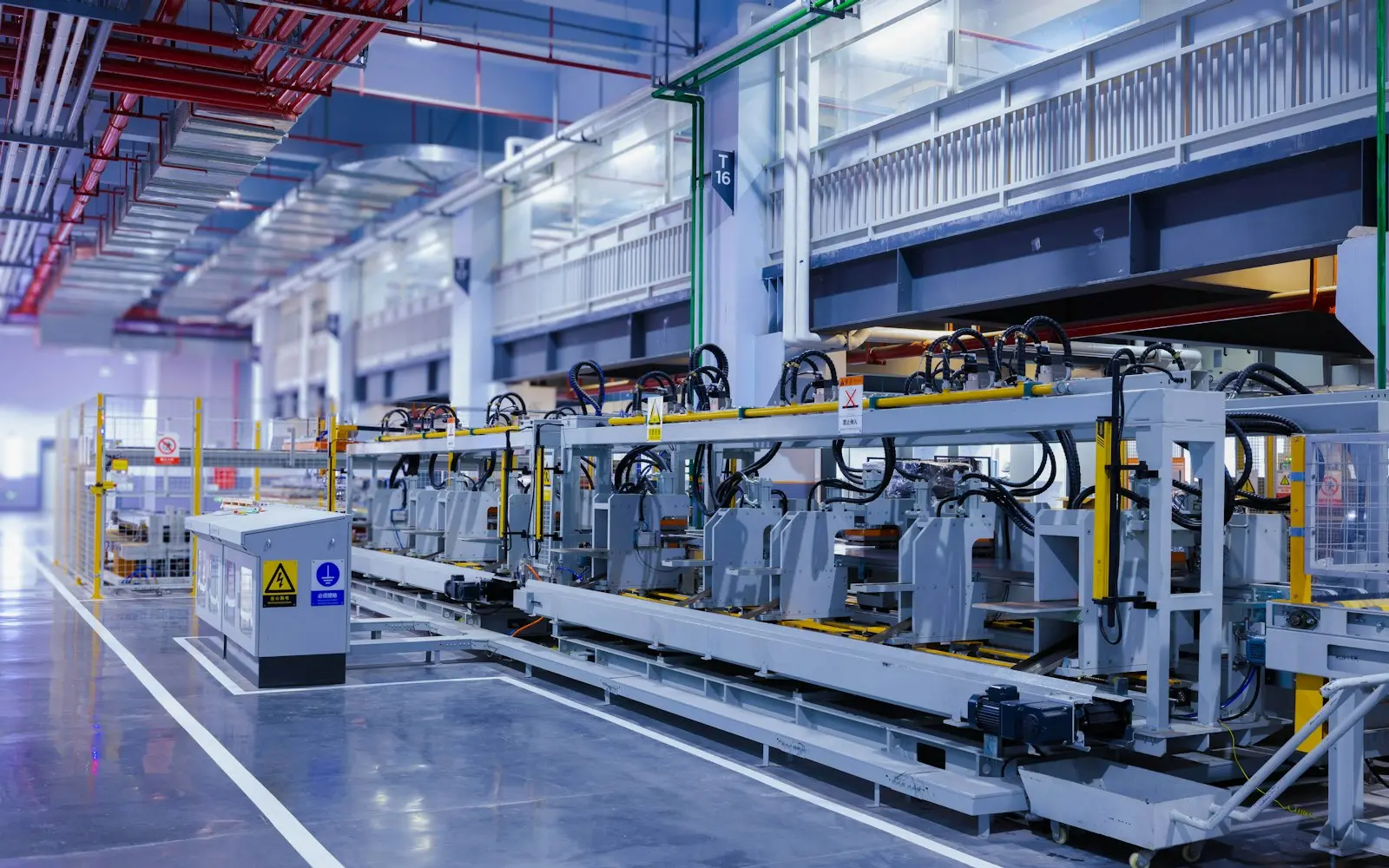
Automated production line with machinery on a bright factory floor
NDA before discovery
You own the code and IP on payment
Code in your repository from day one
A working demo every two weeks
Senior engineers do the work
How we work

Most manufacturing software problems come from the gap between what happens on the shop floor and what the ERP thinks is happening there. A PLC or SCADA system is generating real-time production data that never reaches planning, and an OEM customer is waiting on an EDI 856 advance ship notice that a spreadsheet-based process cannot generate on time.

We build and extend ERP systems (SAP, NetSuite, Epicor, Plex), connect shop floor data through OPC-UA and PLC integration into MES and reporting layers, and handle EDI 830 forecasts, 850 purchase orders and 856 advance ship notices in the exact format your OEM customers require.

Quality and traceability requirements, lot tracking, genealogy and recall readiness, get built into the data model from the start, since reconstructing a traceability chain after a recall notice is far more expensive than building it in during implementation.

The problem

Where manufacturing software gets hard

  • Shop floor data stays disconnected from the ERP

    PLC, SCADA and OPC-UA data historians generate real-time production and machine data that often never reaches the ERP or MES, leaving planners working from yesterday's numbers.

  • OEM customers require exact EDI formats

    EDI 830 forecasts, 850 purchase orders and 856 advance ship notices each have to match the specific OEM's implementation guide, and a mismatched field can hold up payment or trigger a chargeback.

  • Quality and traceability requirements demand full lot genealogy

    A recall requires tracing every lot of raw material through to finished goods and shipment records, which is only fast if that traceability chain was captured at each production step as it happened.

  • Legacy MES and ERP customizations resist upgrades

    Years of plant-specific customization on top of an MES or ERP make a vendor upgrade risky, since custom reports and integrations were often built against internals the vendor no longer supports.

  • Multi-site standardization fights local plant customization

    Corporate wants one standard process across plants; each plant has legitimate local exceptions built up over years, and software that ignores either side gets rejected by someone.

What we build

Manufacturing systems we build

  • ERP integration and extension

    Integration with SAP, NetSuite, Epicor or Plex, or custom modules built to extend what the base ERP does not cover, without disrupting workflows plants already depend on.

  • Shop floor data collection

    OPC-UA and PLC integration that pulls machine and production data into MES and reporting layers in near real time, replacing manual data entry at the end of a shift.

  • EDI integration for supplier and OEM transactions

    EDI 830, 850 and 856 handling built to each trading partner's implementation guide, validated before submission so a formatting error does not become a payment delay.

  • Quality management and lot traceability

    Lot and batch genealogy tracked from incoming material through production to shipment, so a recall query resolves in minutes against existing records instead of a multi-day investigation.

  • Barcode and RFID inventory tracking

    Scanning workflows on the shop floor and in the warehouse tied to the same inventory and production records the ERP uses, cutting manual reconciliation between systems.

  • Predictive maintenance and asset management

    Maintenance scheduling and failure prediction built from the telemetry your equipment already generates, rather than a separate sensor deployment project.

Regulations and standards we design for

  • Software architecture designed to support ISO 9001 quality management documentation and audit trails.
  • FDA 21 CFR Part 820 quality system requirements for manufacturers producing medical devices.
  • OSHA recordkeeping requirements for workplace injury and safety data.
  • RoHS and REACH materials compliance tracking for products shipped into the EU.
  • ITAR and EAR export control data handling requirements for manufacturers producing defense-related components.

Platforms we integrate with

  • SAP and Oracle NetSuite ERP
  • Epicor and Plex MES platforms
  • OPC-UA and PLC data historians
  • EDI 830, 850 and 856 for supplier and OEM transactions
  • Zebra and other barcode/RFID scanning hardware
  • AWS IoT and Azure IoT for equipment telemetry

Connecting the shop floor to the ERP without a rip-and-replace

We integrate through OPC-UA where the equipment supports it, or through direct PLC protocols where it does not, pulling machine state, cycle counts and downtime events into the MES or ERP without requiring a plant to replace working equipment. The goal is planners working from data that is minutes old, not a shift-end spreadsheet upload, while leaving the physical production line untouched.

EDI and traceability for OEM and automotive supply chains

We build EDI 830, 850 and 856 handling to each OEM's specific implementation guide, since automotive and industrial OEMs frequently require exact segment formatting well beyond the base EDI standard. Lot and batch genealogy gets captured at each production step (incoming material, work-in-process, finished goods, shipment) so a traceability query for a specific lot resolves against existing records instead of triggering a manual investigation across paper logs and spreadsheets.

Predictive maintenance from telemetry you already collect

Many plants already generate more equipment telemetry than they use. We build maintenance scheduling and failure prediction against that existing data (vibration, temperature, cycle counts) rather than proposing a new sensor deployment as a prerequisite, and we scope a proof of concept against your highest-downtime equipment first.

FAQ

Manufacturing software FAQs

Can you connect our PLC and SCADA data to our existing ERP without replacing equipment?

Yes. We integrate through OPC-UA where supported, or direct PLC protocols where it is not, pulling machine and production data into the ERP or MES without touching the physical equipment. Most plants keep their existing line and controllers unchanged.

How do you handle EDI 856 advance ship notices for automotive OEM customers?

We build to the specific OEM's implementation guide, since automotive customers typically require exact segment formatting beyond the base EDI 856 standard. Transactions are validated before submission to reduce rejection and chargeback risk.

How long does a lot traceability system take to implement?

A traceability system covering incoming material through finished goods typically takes ten to fourteen weeks, depending on how many production steps and existing systems (ERP, MES, quality management) need to feed into the genealogy record.

Do you build predictive maintenance from scratch or use existing sensor data?

We start with the telemetry your equipment already generates through existing PLCs and historians. Where that data is not granular enough to predict failure reliably, we scope additional sensors only for the highest-downtime equipment rather than a plant-wide deployment.

Can multi-site manufacturers standardize processes while keeping plant-specific exceptions?

Yes. We build a standard core workflow with configuration points for plant-specific exceptions, so corporate reporting stays consistent across sites while a plant retains the local process variations it legitimately needs.

Talk to us about your manufacturing project

Share a few details about your project. A senior engineer reviews every request and replies with next steps, questions, and a rough budget range.

Get a free project estimate