Backend

Java Development Company

A verbose language on purpose, so a system built by one team stays readable to the next one.

NDA on request · Free, no-obligation estimate · Reply within one business day

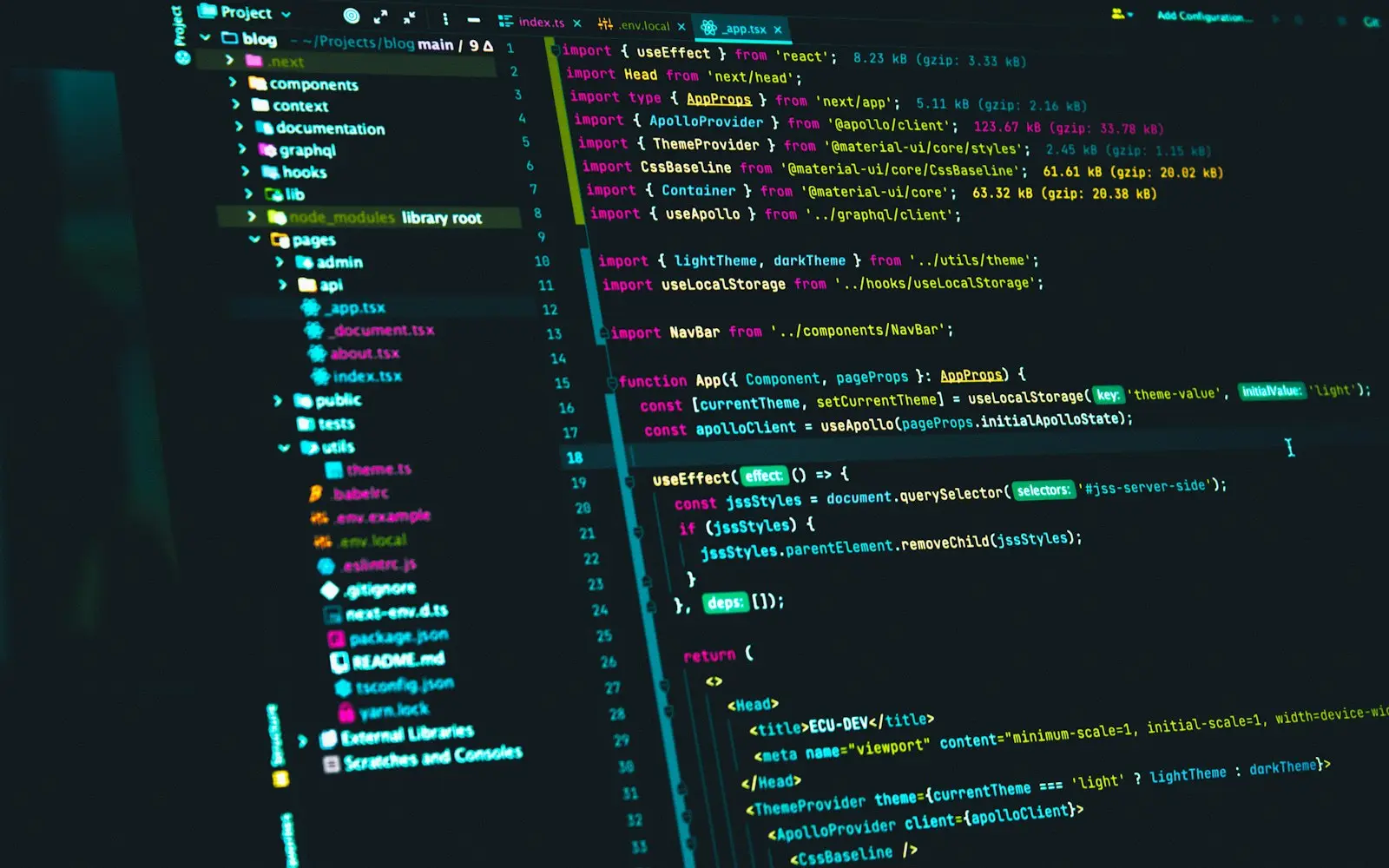
Developers working at rows of monitors in a bright open office
NDA before discovery
You own the code and IP on payment
Code in your repository from day one
A working demo every two weeks
Senior engineers do the work
How we work

Java's reputation for verbosity is also, in the codebases we maintain long-term, the reason those codebases stay legible after the original developers move on: explicit types, explicit interfaces and a strong compiler leave less room for the kind of implicit behavior that becomes hard to trace in a large system years later. Spring Boot removed most of the configuration overhead older Java frameworks were known for, so a new service starts with sensible defaults rather than a wall of XML.

Virtual threads, introduced through Project Loom, changed one of Java's real historical weaknesses: high-concurrency I/O-bound workloads used to require careful thread-pool tuning or reactive programming to avoid exhausting OS threads. Virtual threads let a Java application handle a large number of concurrent blocking calls with ordinary, easy-to-read synchronous code, closing much of the gap with languages built around lighter-weight concurrency from the start. We recommend Java most for backend systems where correctness, long-term maintainability and predictable performance under real load matter more than the speed of the first prototype.

Fit

When Java & Spring Boot is the right choice, and when it is not

Good fit

  • You are building a backend system expected to run in production for many years, maintained by a team that will rotate over that time, where explicit typing and interfaces reduce the cost of onboarding new developers
  • The organization already runs JVM infrastructure (existing Java or Kotlin services, a Kafka-based event architecture) and a new service benefits from sharing tooling and operational knowledge
  • The workload needs predictable performance under sustained, high-concurrency load, where virtual threads and the JVM's mature garbage collectors handle scale well
  • You are building a system with complex business rules that benefit from Java's strong typing and mature static analysis tooling catching mistakes before deployment

Consider something else

  • You are building an MVP or early-stage startup product where speed of the first working version matters more than long-term structure; Java's setup and typing discipline cost more time upfront than Node.js or Python for the same first milestone
  • The team is small and does not already know Java; the learning curve and ecosystem conventions take longer to pick up than a dynamically typed alternative
  • The project is a short script or one-off automation task; Java's build and packaging model is disproportionate overhead for something meant to run once or twice
  • You need the fastest possible iteration speed on a frontend-heavy product where the backend is a thin layer over a database; a lighter framework in another language often gets there faster with less ceremony

What we build

What we build with Java & Spring Boot

  • Spring Boot microservices

    Independently deployable services with Spring's dependency injection, configuration management and auto-configured defaults, communicating over REST or messaging.

  • High-concurrency backends with virtual threads

    I/O-bound services handling large numbers of concurrent blocking calls (database queries, downstream API calls) using ordinary synchronous code running on virtual threads instead of a reactive programming model.

  • Event-driven architecture with Kafka

    Services producing and consuming events through Kafka for systems that need reliable, ordered, replayable event streams between services.

  • Enterprise integration and legacy modernization

    Services that bridge older enterprise systems (mainframes, legacy SOAP APIs, on-premises databases) with modern APIs and cloud infrastructure.

  • Financial and regulated system backends

    Transaction processing and business logic where strong typing, thorough test coverage and predictable behavior under load are priorities the business explicitly asks for.

Ecosystem

Libraries and tools we pair it with

  • Spring Boot for application scaffolding and dependency injection
  • Spring Data JPA with Hibernate for database access
  • Kafka for event streaming between services
  • Gradle or Maven for build and dependency management
  • JUnit 5 and Mockito for testing
  • Micrometer with Prometheus for metrics
  • Testcontainers for integration testing against real databases

What virtual threads changed about Java's concurrency model

Before virtual threads, a Java application handling many concurrent blocking operations (waiting on a database, an HTTP call) either accepted the overhead of one operating system thread per concurrent request, which does not scale past a few thousand, or adopted a reactive programming model to multiplex many logical operations onto a small thread pool. Reactive code is more efficient but noticeably harder to write, debug and reason about than straightforward synchronous code.

Virtual threads, stable since Java 21, let the JVM run a very large number of lightweight threads that block cheaply, so a team can write ordinary blocking code and still handle high concurrency without the operational cost of one OS thread per request. We now default new high-concurrency Java services to virtual threads over reactive frameworks unless there is a specific reason (existing reactive codebase, a need for fine-grained backpressure control) to do otherwise, because it keeps the code considerably easier to read and maintain.
Spring Boot's defaults versus a leaner alternative

Spring Boot's auto-configuration is genuinely useful for getting a service running quickly with sensible defaults for a database connection, security, and metrics. It is also a lot of framework for a very small service, and teams sometimes reach for it out of habit on projects where a leaner framework (or even a different language entirely) would start up faster and carry less operational weight.

We reserve full Spring Boot for services with enough genuine complexity (several integrations, meaningful business logic, a team of more than one or two engineers) to benefit from its structure, and use a lighter approach for small, single-purpose services where Spring's startup time and memory footprint outweigh its convenience.

  • Full Spring Boot for services with meaningful business logic and more than a couple of engineers
  • A lighter framework or plain Java for small, single-purpose services
  • Virtual threads by default for new high-concurrency services over reactive programming

FAQ

Java & Spring Boot FAQs

Is Java still a good choice for a new backend in 2026?

For systems expected to run for years with a rotating team, yes, particularly with virtual threads closing much of the concurrency gap that used to push teams toward other languages. For a fast-moving early-stage product where the first working version matters more than long-term structure, we more often recommend Node.js or Python.

What are virtual threads and why do they matter?

Virtual threads are a lightweight threading model in modern Java that lets an application run a very large number of concurrent blocking operations without the memory and scheduling overhead of one operating system thread per operation. They let developers write ordinary synchronous code and still get the concurrency benefits that used to require a reactive programming model.

How does Spring Boot compare to a framework like Node.js's NestJS?

Both provide dependency injection, module structure and convention over configuration for backend services. Spring Boot runs on the JVM with Java's static typing and longer compile-time checks; NestJS runs on Node.js with TypeScript's build-time-only type checking and generally faster iteration cycles. The choice usually follows the team's existing language and ecosystem investment.

Does Java work well for high-throughput, low-latency systems?

Yes, the JVM's just-in-time compilation and mature garbage collectors handle sustained high-throughput workloads well, and virtual threads extend that to high-concurrency I/O-bound systems specifically. For the very lowest possible latency on a lean service, a compiled language like Go sometimes has an edge, but the difference is often smaller than assumed once a Java service is properly tuned.

What does migrating a legacy Java application to modern practices involve?

It usually starts with upgrading the JDK version, since much of the benefit (virtual threads, better garbage collection, language features) comes from being on a current release rather than an old LTS version. From there we introduce Spring Boot's newer patterns and modern testing incrementally, module by module, rather than as a single rewrite.

Talk to a Java & Spring Boot developer

Share a few details about your project. A senior engineer reviews every request and replies with next steps, questions, and a rough budget range.

Get a free project estimate